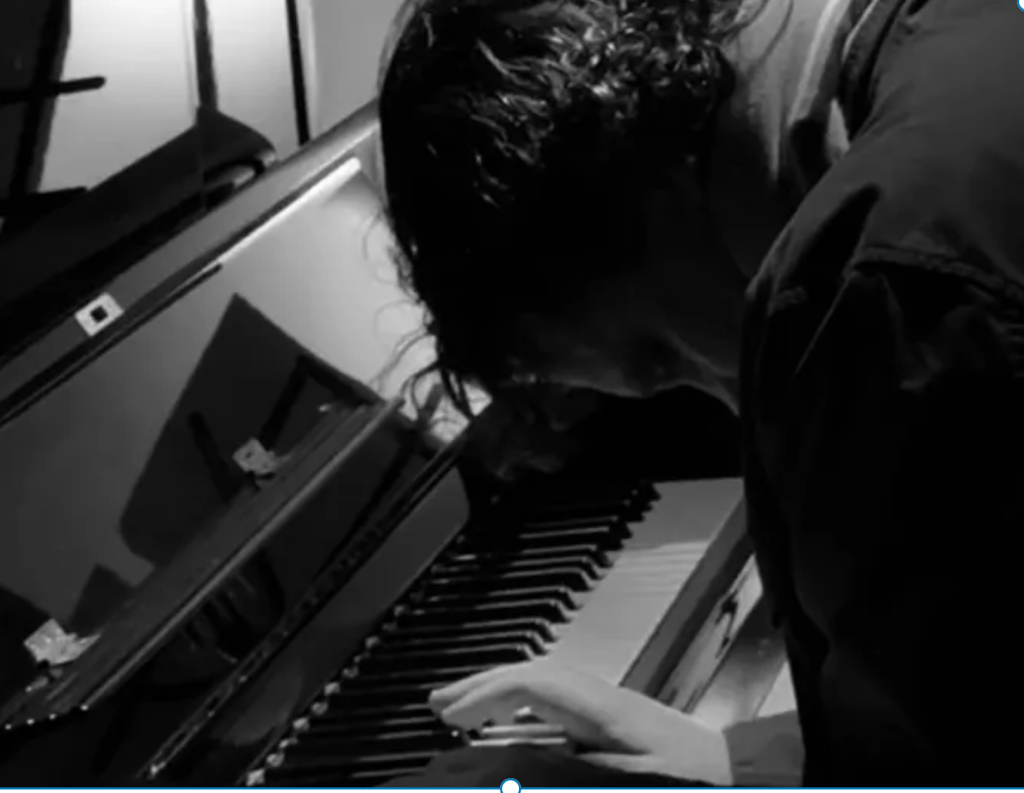
On Sunday afternoon in Richmond, I will sit down at a piano in front of an audience. I can picture it, as I have played it once before. It’s a shiny black upright, and it reflects the player and the faces behind them too. Don’t mind us, pretend we’re not here maybe.
Before I play a note I will try to breathe, feel my feet on the floor, right foot on the sustain pedal. I will feel the weight of 88 keys and hammers and strings and metal and wood vibrating silence at me, hulking like a shiny baby elephant against the wall.
What now, it will say.
Shhhh I will think at it. I am trying not to think.
And then I will throw any musical plans that threaten to jump into my mind out the bloody window on to Swan St.
And I will just bloody play.
Last time I played that piano was for regular planned music. Songs. I was accompanying the supremely gifted vocalist and songwriter Hamish Cowan, whose band Cordrazine blew my mind along with thousands of others nationwide in 1997.
They erupted in the wake of Jeff Buckley’s death and the monster success of Portishead, whose sounds Cordrazine combined to make an Australian amalgam greater than the sum of its parts. Hamish is one of the few people I’ve heard hold a candle to Buckley’s Lover You Should Have Come Over, and we did it some justice on that piano that winter afternoon in 2024.
But I came away from that gig only able to think about the handful of minor blunders no one else would have noticed. Hamish was happy, everyone there was happy. I was…beige. It was ok I guess.
So much practice. So much good music played. And all I took away was a few NQR notes.
It happened again at my last gig as a singer-songwriter (for now at least) earlier this year. The Wesley Anne in High St Northcote has a beautiful piano! I had a well-rehearsed band playing the best songs I’ve written in 30 years. And I loved it, enough. But thinking of it now, the feeling in my gut is the beige of blunders.
Enter Dr Keith Jarrett, my pianxiety shrink, jazz piano genius superstar of the 20th century who played with Miles Davis and went on to build a wealth of solo improvised piano concert and studio recordings that’s like the human genome project for piano.
An actual shrink, Dr Eamon Cooke, colleague and mentor, put me on to Jarrett’s Koln Concert, which turned 50 in January. I was taken with the concept immediately: hall, audience, piano, no plan. And I was mesmerised by the playing that starts somewhere and moves somewhere else, and takes you along with it.
I thought: could I do that? Start somewhere, move to somewhere else, and take someone along with me? Dr Jarrett seemed to think so. It’s not just ‘don’t overthink it, son,’ it’s ‘try not to think at all.’ As in, just start, and follow the music. Be led by the piano, trust it.
Make a mistake? That’s not a mistake, that’s just notes from the future that showed up early. Welcome them in, they’ll show you where you’re going next.
If you check out www.youtube.com/@j4zzd0c, scroll right up to the first efforts I made mid last year, you’ll see short, tentative explorations. Scroll down to this week and you’ll see the room literally spinning as I play like a bird released, to quote Crowded House. Feathers and sh!t and squawking, but plenty of colour and life.
After a year and a half, about 50 improv pieces recorded, and a first go as a duet (https://www.youtube.com/watch?v=25HJ1SLr47c) in September, I’m ready as I will ever be.
So on Sunday at Odeon I will face the baby elephant in the room for the first time in my life as a solo improvisational pianist. I can barely type that last bit, I usually joke that I’m a piano player, or piano guy, lest I seem to take myself too seriously.
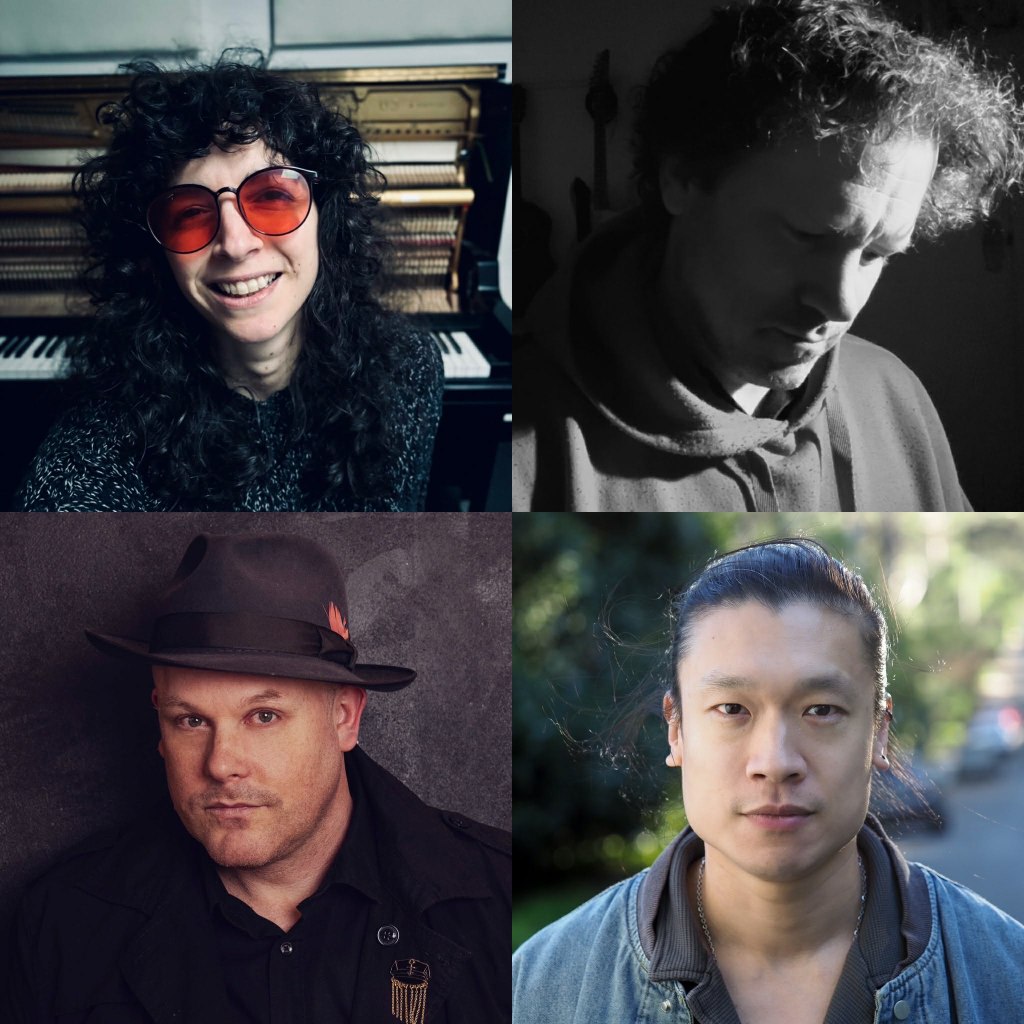
Nathan Liow is a pianist, dyed in the wool. He’s on the same bill, the sixth Piano 4TE event run by local jazz keyboard legend Adam Rudegeair who’ll also be playing, along with Hanna Silver.
3 pianists and me. Could any wise words from them help me feel like a pianist too?
Adam is the one who invited me to play, and he says “playing solo piano puts you in an immersive creative zone…cuts down the noise from the outside world.” He and Nathan both identified how rather than being a source of anxiety, playing live piano can be quite the opposite, a source of respite and healing.
“The phrase “dance with your fears” helped me,” says Nathan. “I think fear, if framed as a dance partner…with grace and give and take, it becomes more motivational anchor rather than a prison.”
Like maybe the massive instrument I experience as the baby elephant in the room is somehow less hulking, more handing out the hugs? Sure – Adam says “there have been many times where I have been in a poor mental state and then I’ve played a gig and felt a renewed sense of positivity, even elation.”
Hanna’s approach to performance anxiety is more of a philosophy, summed up in the mantra she had tattooed on her arm this year saying “so there”.
“There are billions of ways to be human”, she explains, “and I am one kind. So there.”
Since getting the tattoo Hanna says “I keep finding more meanings to it. I’m going to play and I’m going to make mistakes. So there.”
There’s something bold, bolshy about it. It’s a bit punk. I like it.
Nathan has some final reassuring words for me in any pianxiety I may encounter on or before Sunday. He quotes the classics: “Rick and Morty Episode 5, Season 2, Morty has to play one note on the digital keyboard to save the world, and he can’t do it because he’s crippled by fear. Rick yells “Morty! Good music comes from people who are relaxed, just hit a button Morty!”
Yeah, just hit a button. To save the world!
Or our little bit of it at least, on Sunday afternoon in Richmond.

#j4zzd0c #psychiatrying
 My Doctor's Handwriting