Is it normal to find reunions a bit weird? You walk into a room of sensible old people that time has fashioned out of some bright young kids you once knew.
Your brain says they’re the same people, this is normal ageing. But your gut says it’s weird. What will your heart say by the end of the night?
Brains, guts, hearts, we dissected them all. As teenagers. It was the 1990s.
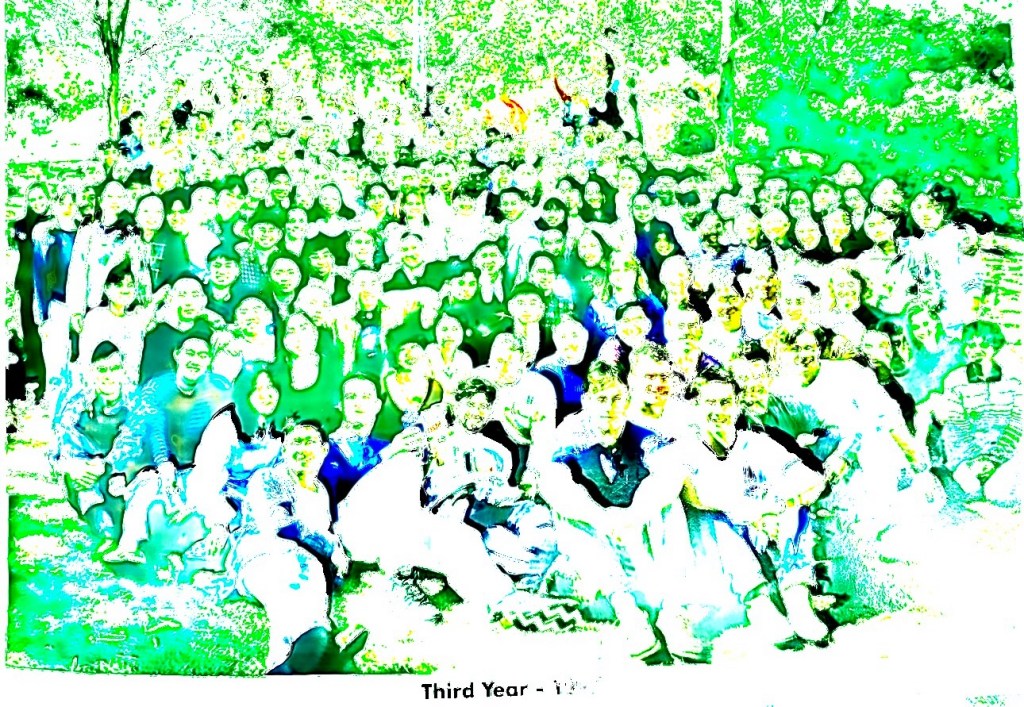
Yes, this year it’s 25 years since my year level of medical school spat out a fresh batch of kids with ‘doctor’ on the front of their names.
Gosh, that felt weird to begin with. Dr Who? Me?
When does an alumnus of undergraduate medical schooling stop feeling like a kid? When does that kid start feeling like a doctor?
To prepare for this piece I asked my colleagues coming to the reunion to message me with some thoughts on their med school years, and the response was priceless.
Busy doctors running departments, clinics and home lives have taken time to write sincerely, with humour and heart.
And it’s all about med school growing humans, not just doctors. It’s less about how we found medical studies, and more about how we found each other.
It took time – 3 years of uni and 3 years apprenticed in hospitals – and it took being together. In person. That’s not so normal anymore.
We started out pretty weird, that’s for sure. We all got into a medical school that only let people in who performed academically in the top 1% of the country.
We were freaks! Every one of us. Bunged in a room together. Sometimes with dead people. For hours upon hours.
Here’s the thing though. Something wonderful began to happen as we did the weirdnesses of med school together, week in week out.
Medicine in the 90s positively pulsed with grim humour, especially if it rhymed and helped you remember where something in the body went or what it did. Much of it is no longer printable. Some of it never was.
But we learned this blokey oral tradition, sniggering at times. It was juvenile, but then so were we.
Brilliant kids gathered around grey preserved corpses, chanting the spells of knowledge:
The freaks that dissect together, connect together.
I didn’t love dissecting dead bodies at 18. But I did crave connecting.
We had made ourselves extraordinary to get in the door of medical school. But like most young people we just wanted to belong.
“We were kids,” says a head of unit at a tertiary hospital who recalls being a “shy 17 year-old, a little naïve and socially awkward…in awe of people who seemed brighter, more self assured and mature than me.”
Another medical leader says “I remember not feeling like I belonged…I came from a country public school, and that wasn’t normal.”
Some came from further afield – one sole representative of his state of origin moved here and felt “daunted” by the “amazingly intelligent” people in the lecture theatre that became our second home for three years. In that time though, he grew to feel “part of a big family”.
Another not-from-here young bloke had a “coarse, colourful, less filtered and sometimes raw view” that he now connects to feeling a bit anxious about the reunion.
There was a sense for him also, of growing to be part of a cohort he’s proud of, with “many seen and unseen superstar individuals within it.”
Superstar? He’s right. There are professors I quote in this piece, whose dance moves and 1990s clothing choices I can recall, if fuzzily. That lecture theatre positively pulsed with potential.
Although that might also have been the hangovers. Some of us were numbing a bit of existential angst alongside the usual social anxiety.
Because under the excitement of the new life of uni, we were I suspect a bit careworn already. We had cared so much about high school to get in here. Were we really ready to care that much about med school?
Every day we showed up here, was a day closer to spending the rest of our lives carrying the care of strangers who were suffering.
We were only just legal in pubs! We had living to do! Bad poems to write! Questionable choices to make!
Plus, I – like my peers above – was feeling seriously intimidated by the combined IQ in that lecture theatre.
Looking around (through sunglasses) at all these bright kids whom I was sure were better at academic work than me, I had to wonder, did I have to get better at the books to belong?
Wasn’t I here to get my patients better? Why was I so worried about my peers being better?
But here’s the crucial pivot of medical school, that my peers in 2025 have clarified beautifully.
We couldn’t belong while competing against one another.
We’d had to compete so damn hard to get in, of course. But competition is at odds with cooperation and connection, neurobiologically and in evolutionary terms.
As Professor Paul Gilbert, originator of Compassion Focused Therapy says, “competition kills empathy”.
Or as a colleague who trains specialists notes: “What you need to get in to medicine is to be smart, work hard, be competitive.” But to be a good doctor, “you need to be a good communicator, able to connect with your patients, putting them and your colleagues ahead of yourself.”
“I should no longer need to prove myself”, says that head of department, “but still feel the need and value of belonging to this group.” – and that’s the pivot that Prof Gilbert backs up for us, from competition to connection.
In fact one of the professors teaches internationally and the first slide she shows first year med students says:
“You’ve got in – the competition stops here. From this moment forward you work in teams.”
Great slide. I wish we had seen that as a sharpie-scrawled overhead in 1995! But then, becoming a doctor involves so much learning that can’t just be taught as an idea.
You have to practice, immersing yourself in a culture, not just facts. And a new culture is scary when you don’t yet belong.
In this much however, we had developmental psychology on our sides: undergraduate medicine got us early, at a stage of adolescence where group belonging is the thing.
We bonded like teenagers do: deeply, rapidly, at the level of identity.
This is borne out in so many colleagues’ words here: we became doctors together as medical students, through belonging. “I found my tribe in medicine” said a professor, “that’s seen me through ‘growing up’ – from an awkward teen to a mostly formed adult.”
Another major theme hit me quite unexpectedly in going through the responses from peers.
They flipped the 5-miles-in-the-snow stereotype of dismissing young-folk-these-days on its head.
Another professor is “grateful that our medical school wasn’t rushed – we had time to learn, to digest each subject and to also just time to learn about ourselves as young adults.”
One colleague worries that “amidst virtual lectures with disengaged students in little black boxes…will medical students now feel the same bonds from having battled in the trenches together and survived?”
“We had it easier”, says another, “no phone cameras or videos to catch our mistakes. No social media. So much more F2F interaction – lectures, tutorials, nothing ‘online’. Was I disappointed when my son declared he didn’t want to do med? A little initially, but ultimately no.”
My peers were so glad they studied medicine when they did.
The only regret, several said, was not keeping in touch since. One would like to “fight a bit harder to maintain the closeness of some friendships that waned”, and another has “some regrets that I didn’t get to know more people from our year. But it isn’t too late! As I have found recently, reconnecting with folks.”
All respondents say they are looking forward to the reunion, if with some apprehension. They reflect with pride on the connections of three decades ago.
They are clear that their gratitude for having gone through med school in the 90s is not because they now have all that massive learning and stressful assessment behind them (though that is true).
No, they’re glad to have gone through when you really could belong, in person, together. When you had to, because there was no other way to make a kid into a doctor.
By the end of the night of our 25 year reunion, I suspect our middle-aged hearts will know the answer to the weird-normal question.
Your younger selves go through something weird together, and grow together, until it becomes…normal.
Part of who you are.
#psychiatrying
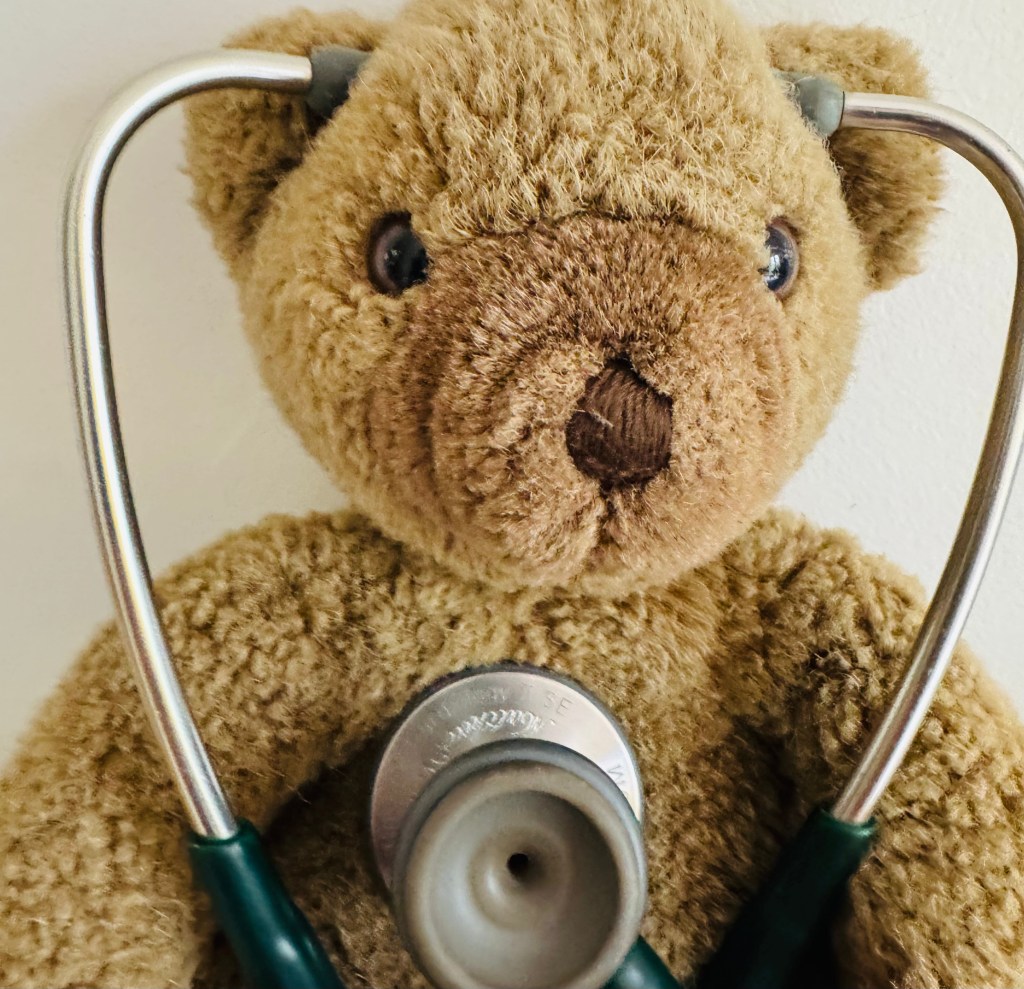
Top image: Mercutio Volleyball appears courtesy of 1995. He sat on my desk in exams and his ballistic properties were tested in the main medical school lecture theatre. He holds strong views about growing up too quickly.
Bottom image: The last time our year level was together, 1997. Filtered with the aim that everyone looks as terrible as each other, and the now unbelievable youth on display is represented as a weird bluey green spread around diplomatically and democratically.
 My Doctor's Handwriting