Most of us know the feeling. The person in front of you says or does something, and it’s like you knew beforehand what was coming. It would be weird if it wasn’t so ordinary.
It’s so ordinary in fact that we don’t even tend to notice our spooky-good ability to guess the chess game of human interaction a few moves ahead. Well, not until it goes on the blink. Painfully.
And if you’re sitting in a psychotherapist’s office, it was probably pain of that kind that brought you in. Relationships are the main reason people seek therapy.
It’s not what brings you here to see me, it’s who.
Relationships live in our automated, procedural memory, the how-to memory where skills and ways of being live without words.
Psychodynamics is the century-old science and art of understanding this automated memory and changing it (also known as learning). I don’t use the term unconscious, because it freaks people out, and no wonder – the same word for automated functioning that’s switched on 24/7, as for being in a coma? There is nothing more awake than the human unconscious!
The language we therapists have inherited lets us all down like this. Thus a more important field of human endeavour was surely never less well translated for ordinary living. Psychodynamics? I don’t know, something about Freud? Your mum? Cigars! Dreams! More cigars! Lying on a couch forever! Falling in love with your therapist! Mobsters in therapy! You’re good, you!
It’s funny, but it also isn’t. Because so much suffering arises from not understanding our automated body-minds. And so much is alleviated when we understand them, and (vitally) do something different. When we change our practice in daily life.
So I teach psychodynamic psychotherapy to trainee psychiatrists. They are often new to key ideas from psychodynamic theory, and at lunchtime teaching sessions they need accessible learning, not impenetrable jargon from last century.
Whether they go on to become therapists or not, I want them to know about our automated inner lives, as they’re in everything we do anyway, and knowing about them will help these young doctors be better humans as well as clinicians of any kind. You don’t have to be a relational therapist to heal people through relationship, but every good idea that guides you helps healing happen.
So this is why I talk about invisible wardrobes.
All relational therapy sits on a foundation of learning theory, because everything that goes on between us is learned somehow. All the problems a person brings to therapy have origins in what we have learned to expect from other people, how we have learned to predict what others will do, and what that means about us in ourselves.
All of this is recorded somewhere in our nervous systems.
Nervous systems have many jobs inside the body, keeping the body ticking over. But their job outside the body comes down to one thing: guessing what’s going to happen next. Our survival depends on it, as it does for animals of levels all complexity from a worm to a human.
But what adds complexity for mammals and especially primates, is that we need each other to survive. So our nervous systems have to make guesses, not just about what things in the environment might do next, but about what others in our group will do next.
And how do we make guesses? We use what we know. In human group life, we’ve evolved a lightning-fast ability to use what we know about people from our past to make split-second guesses about the person in front of us now. The technical term for this is transference.
This is not a sexy term. It sounds like something your accountant has to explain to you again each financial year. And yet it is so alive with humanity! It has so much richness to unlock as you seek to understand why your relationships feel as they do. And why you are drawn to one person and repelled from another.
Your transferences underpin your attractions, be they sexual or social or professional, and so they shape your life.
That’s powerful! And so rarely understood. It gets left to the therapist’s office and therapy conferences, when it could be known in the same ordinary way we may know what grows in our garden, or how our vehicle is ageing.
Let’s look at how this superpowered form of memory gets going in your life. Daniel Stern MD, infant researcher and psychotherapist, described in 1985’s The Interpersonal World of the Infant how babies arrive in the world knowing already how to connect with us through feeding, eye contact, and crying, but also how to build an inner map of the world based on what changes (variance) and what stays the same (invariance).
He stressed that the interpersonal information that changes or stays the same is particularly important. So new information about a caregiver (eg. their coming or going, the changing volume of their voice, the changing smell and feel of their skin) really gets a baby’s attention.
So what do babies do with this information? Well, human nervous systems, like all animals, detect changes and connect them with other things that are happening at the same time- we call this classical conditioning, as in Pavlov’s experiment with his dogs.
There is also operant conditioning, which is where your action is associated with an outcome, like the monkey getting a treat for pressing a button.
Both kinds of conditioning are going like crazy when a baby is learning about the world they have arrived in.
Imagine: When Dad is near, I hear a deeper voice, I smell aftershave, I am picked up and raised up to near the ceiling! It’s exciting! So next time I hear that voice, I get ready for excitement. This might be a problem when he goes back to work and I expect excitement when he gets home in the evening!
That’s classical conditioning. There’s also operant conditioning – when I cry out, Mum appears, soothing me. I learn to cry out when I need something, and begin to develop trust that my cries will be heard. When I find my fingers in the midline of my body after some weeks of being alive, my parents delight in me, so I want to do it again and again.
Over time, Stern says, a baby has so many experiences of these caregivers that they develop RIGs, or Representations (internal imprints) of Interactions that have become Generalised. There’s a RIG for Mum, a RIG for Dad, and for anyone else who’s around enough for the baby to collect enough data to form a RIG. They let a baby know what to expect when the sensory proximity signals for each important person show up.
Ah! That’s Grandma, she has a smoker’s aroma, does gentle belly rubs and sings. That’s Uncle, he holds me upside down and has a long beard that smells of chlorine, and everyone’s relaxed and chuckling when he’s here.
These imprints live in our procedural memory, the non-verbal, “how-to” memory where skills and ways of being live, like riding a bike, learning to swim. It’s where relationships live: RIGs are the protorelationships, the earliest form of memory that helps babies get to know us.
More critically, RIGs let babies know themselves. Stern’s book is all about the development of the sense of self in the first year of life, and as the title suggests, it’s all interpersonal, baby.
What babies learn from guessing about others affects who they become; we can thus see how those RIG building blocks form foundations for transferences.
Crucially, transferences are not just about someone in front of you reminding you of someone you knew before. It’s more like re-body-ing. For babies, body and mind are the same experience. The earliest relationships live only in the body, and that’s where we learn most deeply about who’s around, and who we are becoming as a result.
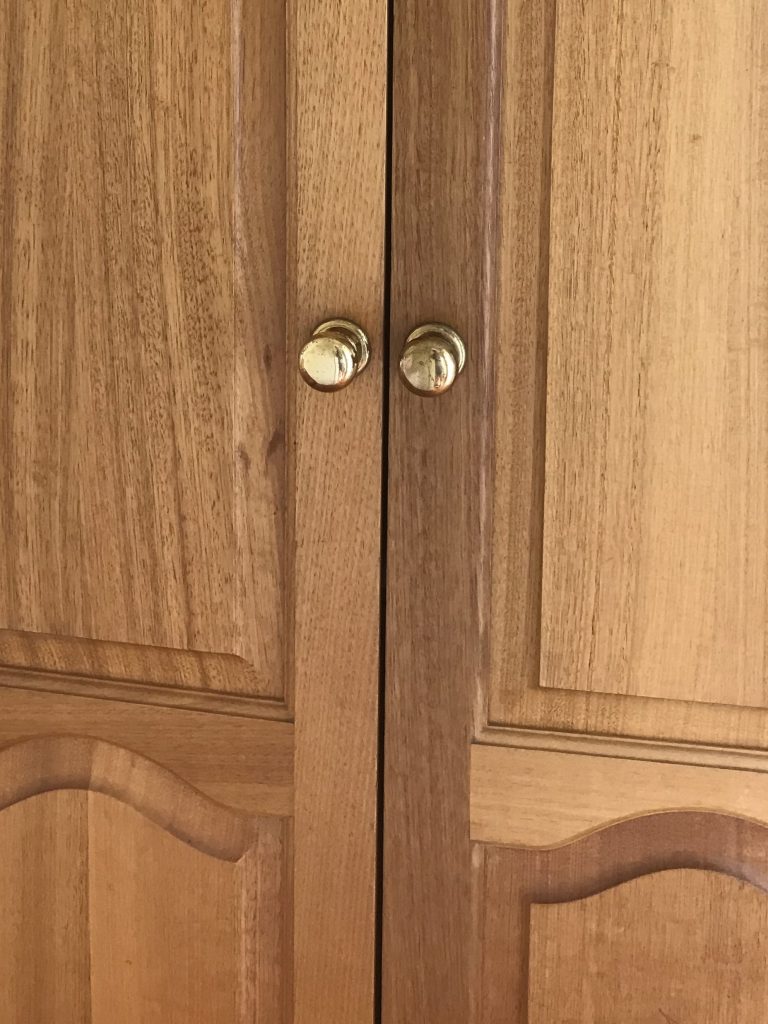
So this is where the wardrobe comes in. I teach trainees to think of their transferences as a collection like an invisible wardrobe they carry within, that is used every time we need to guess what someone will do next. We take in the person in front of us now in all our senses, then our wardrobe opens up and the best fit will be found.
Crucially again, the fit will be felt in the body (where we experience our procedural, how-to-be-with memory) more than known in the mind. That’s why it’s a wardrobe – clothing the body, feeling the fit. Who do you re-body me of?
Bloke with a beard? Uncle! I am ready to chuckle. Old woman with throaty laugh who smells like cigarettes? I feel weirdly warm in my belly. Of course these are caricatures; the many times a day your nervous system makes guesses from the wardrobe of transference will involve much more complex and subtle calculations.
That all makes sense for guessing about people you can’t guess from conscious knowledge, like the stranger on the train or the workmate who’s new, but what about in closer quarters? The better we know the person, the less we need transference, right? I know heaps about my partner, you’d say, so why would I need the wardrobe to guess about them?
In true therapist form I would say: well, that depends. In fair weather, when things are fine, you don’t need the wardrobe so much for people you are closest to. You see them for who they are, how you are experiencing them in the now, in all your senses. But in stormy weather, when you are stressed, it’s a different story.
A brutal truth of our ancestry is that anyone you let close enough to know you is also close enough to hurt you. Trusting another human has been for tens of millennia the most difficult and dangerous thing any human can do.
Plus, once you’re stressed, your brain loses connection between thought and feeling, and your verbal ability to send and receive is down to words of one to two syllables.
In such a stormy situation, five senses worth of current information about a person who’s close enough to hurt you – whether they mean to or not – is overwhelming. So our brains go for what they know. They reach into the wardrobe.
This person is speaking sternly to me – who else has spoken sternly to me? What happened then? This person looks frightened of me. Who was the last person like this who found me scary? What helped then?
And what if nothing helped then?
That’s a scary thought.
And it’s why I use the wardrobe metaphor. It lets us be a bit playful with a poorly understood and therefore feared concept. We get to imagine your nervous system throwing all kinds of costumes at the person in front of you in the hope of a good fit. Of course, the costume will never quite fit, because your partner isn’t your mum or dad or grade 3 teacher or footy coach.
But it will try anyway, because in some way it helped our ancestors survive.
The wardrobe isn’t some evolutionary hangover though. It’s a precious collection of your past relationships in all their mad glory. Understanding it can add a lot of colour to your inner life – just think of all the shapes and sizes people in your life have been, bunched together on coathangers among the mothballs.
It’s also an empowering metaphor, as wardrobes can be shut and locked.
By having a useful metaphor for the guesswork your brain does within split seconds of being in someone’s company, you can catch it guessing before it starts thinking it’s right, especially if it thinks you’re in harm’s way like in the past, when in the present you’re ok.
And on a stormy day with someone close, you can remind yourself to stay present, notice what you can about now with them, and imagine keeping that wardrobe shut.
Thanks wardrobe, you might say, I know who this is, and I know I am here now with them. I don’t need your guesses this time.
There’s an ancient yet current beauty in this. Each time you shut the stone-age wardrobe with thanks for all the deep protecting it is trying to do for you, you get to see and feel the person in front of you for who they are now.
Here. Now. With you.
And like it’s always done for our babies, that lets you see and feel the person you are becoming.
#psychiatrying
 My Doctor's Handwriting