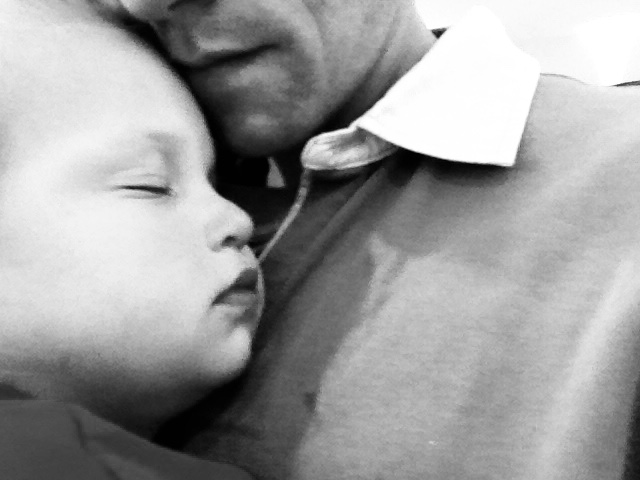
Here in Men’s Health Week – which is appropriately also Infant Mental Health Week – I want to talk about the Exiles of Dad.
Exile means expulsion from your native country for political or punitive reasons. But it’s a word that also seems to fit the dads I have seen losing their connection to their loved ones, or whose absence is described by loved ones in my care.
It seems there are three Dad Exiles in Western life. Early fatherhood, separation/divorce, and early death.
The later two exiles are pretty obvious. Much has been said about disenfranchisement of dads by separation processes including child protection and family court systems. Much has also been said about men presenting later for medical care and dying younger from preventable diseases.
I want to talk here about the first Dad Exile, as it is not as well-known. Importantly it precedes – and I believe could help prevent – the other two exiles.
I am talking about the exile experienced by men on transition to fatherhood.
What? New fatherhood as exile? Isn’t that a bit dramatic? A bloke’s got a new baby, didn’t he just win the lottery of life?
Well, yes. That’s what he gets told. You’ve won, mate! Mum and bub both well, nothing to complain about.
Nothing he’s allowed to complain about, anyway.
But dad after dad after dad I listen to tells me of the normal losses of new fatherhood. Think about it: what do most men prize in pre-parenting adulthood?
Working hard, playing hard, finding love.
New dads can’t work or play like they used to, they often report feeling they do a crap job both at work and at home, and they lose touch with the mates they used to go out with or play sport with.
But the loss that hits harder is love.
The woman they chose has changed and is now oriented around the baby – this is called Primary Maternal Preoccupation – leaving the dad without that close connection, especially the physical affection and sex, usually the last thing on a new mum’s list of priorities.
It’s like, in bringing home from hospital the mother of his baby, he’s lost his girlfriend.
But he can’t complain, can he? Normal birth, normal baby, normal dad-blind world. He’d better shut up and get back to his paid work after his laughable paternity leave, if any.
And so the exile begins. Long days of paid work, long evenings and weekends of unpaid work, then either sleeping poorly to help share the nighttime load, or racking up the guilt for sleeping while Mum does the nights too.
Many dads don’t engage with their babies as we know they can if supported, and so they just don’t enjoy the first year or so of caring for them. They know it’s important to give Mum a break, but they do it for her more than for their own engagement with Bub. These are the dads you’ll see out on a weekend morning with baby facing away from them in the pram or harness. Both look bored. Dad may be on his phone, desperate for some connection and stimulation.
Other new dads seek connection and stimulation outside the home. They throw themselves into overwork, giving the cream of their daily energy to the ‘work family’, and bringing home the dregs. They might play harder in more intensive bursts, organising more weekends away with the lads than is fair to Mum and Bub, or coming home after a liquid Friday lunch in the wee hours of Saturday morning.
It’s exile, because their native country, the relationship with the mother of their child, feels like it’s banished them. Not that Mum has actually ejected them from the land, but that it feels to these dads like they don’t belong there anymore.
So how do they get home again? Most do return to native shores, many for example saying they feel like a real dad once Mum is taken up with baby number 2 and the firstborn is Dad’s to care for. Many may say they feel closer to Mum again once the youngest child goes to school.
But the man who returns from exile is forever changed, marked by that time away. Many dads go on to separate from Mum, and years down the track, so many dads go on to die younger than Mum.
What if helping men prevent their first exile could prevent the second exile and even the third?
Men in my practice, invited to connect with their babies from the earliest stages of the journey to parenthood, tend to derive more pleasure and meaning from their relationship with their baby and the baby’s mum. They find their babies stimulating, and the feeling is mutual!
So they don’t need in the way they used to, the connection and stimulation of their work and play. They can also cope better with the change in intimacy with their partners, because the lost sex most report is not experienced as a loss so much.
If new dads avoid exile now, their relationship with their baby’s mum might be repaired just as we all know Mum’s body needs repairing after birth. This is the time when the seeds of so many separations of parents of school-aged kids are sown, when a vicious cycle of paternal absence and devaluing gets going.
And so the second exile – of the dad as access parent – has its roots in the first.
I have looked after too many mums in psychotherapy, whose dads died too soon, in their 40s or 50s, from preventable illnesses like cancer and cardiovascular disease, alcohol-related conditions and depression. The ripples of that third exile for the grandchildren who’ll never know their granddads are profound and saddening.
That’s the final exile, to the country no one comes back from.
It’s a longer period of time from first exile to third, so it’s a longer bow to draw. But it’s worth wondering: if we prevented paternal absence early, could we prevent it later too?
If we can bring him home now – if he can bring himself home – what will that bring for us all?
________________________________________
To end I’d like to link to a beautiful song I use in teaching some of the above to dads and clinicians, which is about an actual exile long ago, but that resonates powerfully with dads today:


 My Doctor's Handwriting