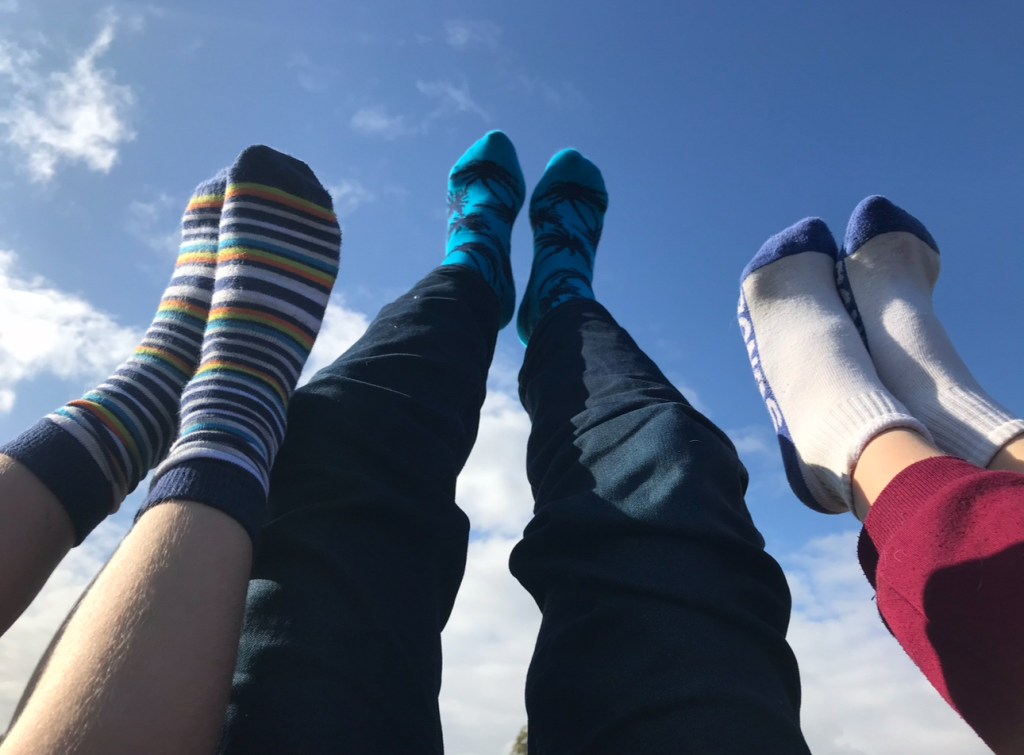
(pic: multiple healthy legs, one of which was definitely broken in years prior)
I’m a psychiatrist, a medical doctor trained to diagnose and treat mental illness.
But I went to Medical School to become a healer, and find myself increasingly uncomfortable with our creaking Western illness model. Dividing body from mind, it treats our human suffering as individual mental illness.
Like a broken leg: locating brokenness in one person.
I’m far from alone in this concern. Some argue over whether to call ill people patients, clients or consumers; the bigger problem, others say, is in calling them ill at all.
It’s time we grew out of this broken model, they suggest, into something better.
More dignified. More hopeful.
Of course, to work for my patients and families, with my colleagues and trainees in the system as it is, I have to use what we have now.
But I also talk with them, listen to what they think about our illness model.
The word ‘patient’ is descended from Latin ‘to suffer’. ‘Ill’ on the other hand is descended from an old Norse word for ‘bad’. It remains stigmatised and shaming, no matter how far we’ve come with public awareness campaigns.
“What’s wrong?” a kindly soul will ask someone in distress, hoping perhaps to help put things right.
Right. Wrong. See the problem here? The moralising is woven into our efforts to care, and judgement is imported whether intended or not.
Pain, distress, suffering, difficulty. All useful words. All permit us to convey and meet human need.
Pain is needed, a vital signal, and this applies to emotional pain as much as physical pain. You wouldn’t try cooking without the signalling system to withdraw your hand from the fire; neither should we try human relationships without the ability to sense threat and act protectively.
Well before we learned to use fire, we learned to connect; all mental health conditions have tribal contexts in which they make sense, because we evolved collectively.
Ours were not the first social networks to form on the planet, but they are perhaps the most complex and powerful, and they signal through pain and difficulty. Dr Freud and a brain scanner would agree about this.
I wouldn’t wish such signals on anyone, but as a clinician I try firstly to dignify people’s suffering by honouring its remarkable origins. That way I start with the person in the pain they are in now, in light of all that came before, without being in a blind hurry to pronounce illness and prescribe solutions.
Sometimes we must hurry of course, to help the suffering person obtain necessary relief from acute distress, or to help address immediate danger. But once the crisis passes, we must look for what it wrote on the wall.
In centuries gone by the writing might have said “she’s crazy because she’s a witch” or “he deserved a nervous breakdown, he’s a sinner”. That’s why the illness model was such a step forward, allowing that it might not be your fault you’re ill! It’s not the Devil’s work, there’ll be no public shaming by dunking.
But our current western concept of illness shames too. By calling you ill, it isolates you. It separates you from the well, those on the other end of this broken binary.
The cure for the isolation of shame is belonging. People you belong with are the ones who can best help transform your pain and difficulty, to heal.
‘Heal’ and ‘whole’ have the same roots. Healing means finding wholeness in – as others have put it – your place, your purpose and your people.
This need for healing is what crisis after crisis writes on my patients’ walls. And it’s where I get my hope as a clinician.
Neuroscience now shows how the psychosocial has profoundly biological effects.
I now concur with those who say that the best drug – and our best hope – is good relationship. The right medication or neurostimulation can help, and is sometimes essential, but it’s nothing without the right people.
We can actually use that broken leg idea here. Much has been said of fossil records of healed fractures in human leg bones. It suggests our species realised we could get better together, when we stopped leaving those we deemed broken, to die alone.
In our darkest times any one of us can feel broken. But as long as there’s an ‘us’, a tribe that knows it gets better together, then we are not broken.
As US psychiatrist Dan Siegel says, “the separate self is a toxic lie”, noting that he comes from the most individualist and socially riven country on earth. Where broken legs go untreated – people hobble around the streets in pain.
We in Australia made sure this doesn’t happen, with health systems that make sure actual broken legs receive treatment.
We did that; surely we can do this. We can grow our language so it does a better job of preserving dignity and hope for people in unimaginable pain and difficulty.
That could be any of us; this is about all of us.
Language matters. It’s change we mustn’t delay.
Lifeline 13 11 14
If I have borrowed without attribution and you know the source, please contact me so I can attribute correctly! Thank you.
 My Doctor's Handwriting